Overseas indentured migration from India was initially overwhelmingly male –dominated, and it came to a point where colonial officials had to forcefully mandate laws on gender-balanced voyages in the 1840s. This led to just a slight improvement as the share of female emigrants rose from next to nil to around 25 per cent. Women and men on indenture would be dubbed ‘coolies’, a word whose origins could either lie in the Tamil word ‘kooli’, which means ‘wages’, or the Turkish word ‘Quli’, which means ‘slave’, or even the Chinese words ‘ku’(bitter) and ‘li’(strength). Indentured migration would start with a recruiter, known as the arkati, scouting ‘markets, carnavanserais, railway stations, bazaars, temples and urban centers’ for likely candidates who could be persuaded to embark on the long journey. In the first few decades of indenture, this would often include extreme coercion, if not outright kidnapping, as the concept of overseas travel was still new to the labourers. To overcome this, the entire process of emigration was brought under legislation with lasting legacies. In the 1840s, legal provisions introduced a ‘protector of immigrants’ at the port of disembarkation and a ‘protector of emigrants’ at the port of embarkation. The latter now survives as a department in India’s ministry of external affairs. As per an act of 1844, the protector of emigrants would ensure that ‘no emigrant shall embark without a certificate from the Agent, countersigned by the Protector’ leading to a curious phrase that is now imprinted in Indian passports as ‘Emigration Check Not Required’. After frequent protests and a long-protracted debate led by Indian political leaders, indenture was abolished to give way to the emigration act of 1922, which was again replaced in 1983 to govern contemporary labour emigration.
In the late 19th century, with better regulations and word of mouth advertisement of returning emigrants, indenture transformed into a kith-kin based system of migration that would be the hallmark of the Great Indian Migration Wave. It is also worth emphasizing that indentured migration formed less than 10 percent of all work-related migration during its period of existence. Indenture has been seen as a ‘new system of slavery’ by some but was also an escape from an older system of slavery or domestic bondage induced by Caste, and other pressures. This is why the abolishment of the system did not stop migration from the key recruiting districts as they continued to supply migrants to different places for another 100 years.
This is take from the book India Moving : A History of Migration by Chinmay Tumbe
Excerpts is a series where we post thoughtful passages from different books which provide for a quick and easy reading.
Bapuji found ways to
spread his message in even the most unlikely circumstances. Some years before I
(Arun Manilal Gandhi- Grandson of Mahatma Gandhi & son of Manilal Gandhi)
got to the ashram, my grandfather was attending one of the conferences in
London to discuss the future of India. As always, he decided to wear the
homespun cotton he had adopted as his uniform. He was representing the Indian
people, most of whom lived in her poverty and the garments were a reminder of
that. The British officials treated him with respect and arranged for him to
stay in an elegant spot in London with security befitting a head of a state.
But Bapuji decided, "I'd like to live in the midst of the textile
workers, preferably as their guest," he informed them.
The British officials were aghast.
Remember that Bapuji's position on
keeping Indian cotton in India had hurt the British textile industry. With
Indians spinning their own clothes, British companies weren't able to charge
the big markups that they had previously, and British workers were angry at my
grandfather for their lowered wages.
"If
you stay with the textile workers, they will kill you," one of the
officials warned. "There is so much
anger among them that we fear for your safety."
"That
is all the more reason that I should stay with them- so that I can explain the
case of Indian people," Bapuji
said calmly.
Reluctantly the British acceded to Bapuji's request, and he went to meet
the textile workers. He approached them with the respect and understanding that
were his hallmarks. He described to them the extreme poverty that was the norm
in India and explained how spinning their own clothes allowed the people in some
villages to rise above the most meager level of subsistence. He offered
compassion for the British workers plight and told them he understood that they
too wanted to support their families in the best way possible. But he urged
them to join him in helping the Indian people claim out of poverty. Not only
did British textile workers listen respectfully to my grandfather, but he won
their acceptance. Many became fans and supported his many endeavors.
It is unusual for angry people to change
their position and even more unusual for them to swing to a stance that goes
against their own interests. But by listening and understanding, Bapuji managed to diffuse the textile
workers' anger and gave them see what was needed globally rather than just
personally.
This is from the book The Gift by Arun Gandhi.
Excerpts is a series where we post thoughtful passages from different books that provide for a quick and easy reading
Arjuna’s flag is known as kapi-dhvaja,
as it has the image of a monkey (kapi)
on it. Monkeys have long represented the human mind, as like the mind they are
restless, dominating and territorial, clinging to the source of comfort, their
mother, until they grow up. Another word for kapi is va-nara, meaning
less than human. It is derived from vana-nara,
meaning forest (vana) people (nara).
But
the monkey atop Arjuna’s flag is no ordinary one. It is Hanuman, the mightiest
of monkeys, whose story is told in the epic, Ramayana. He is always visualized
at the feet of Ram, who appears human (nara)
but is actually God (Nara-yana, the
refuge of nara). Nara and Narayana also
refer to a pair of inseparable Vedic sages, avatars of Vishnu. The inseparable
Arjuna and Krishna are considered Nara
and Narayana reborn.
Va-nara, nara and Narayana
represent three aspects of our existence: animal, human and divine. Scientists
now speak of how the human part of the brain is a recent development and sits
on top of the older animal brain. The animal brain is rooted in fear, and
focusses on survival, while the human brain is rooted in imagination, and so
seeks to understand itself by understanding nature.
Between survival and understanding comes judging—the state when
everything and everyone around is evaluated based on imagined benchmarks, in
order to position oneself. The animal wants to identify the other as predator
or prey, rival or mate. The judge wants to classify the world as good or bad,
innocent or guilty, right or wrong, oppressor or oppressed, based on his or her
own framework. The observer wants to figure out what exactly is going on.
The journey from animal to judge to observer is the journey of va-nara
to nara to Narayana. It involves the uncrumpling of aham, the frightened mind, and the eventual discovery of atma, secure mind. This is what it means
to be a Brahmana.
Excerpts is a
series where we post thoughtful passages from different books that provide for
a quick and easy reading
As June closed, the
Indian Army came closer and closer to their goal - to clear out the Pakistani
army, peak by peak.
Lieutenant Manoj Kumar Pandey of 1/11
Gorkha Rifles put up a tough fight against stiff resistance from Pakistan’s 8
NLI (Northern Light Infantry) in
Khalubar. Amidst bullets flying over his head and grenades bursting around him,
he destroyed four bunkers, thus inspiring his boys, before an MMG (Medium
Machine Gun) bullet hit his head. Not surprisingly, Lieutenant Pandey's platoon
successfully recaptured the Khalubar ridgeline on 3 July 1999.
Some goals are so
worthy, it's glorious even to fail.
- Lieutenant Pandey in
his war diary.
19 June 1999
Dear Pawan,
(Do read this letter to as many as possible)
I received both yours letters but could
not reply to the first one. Both of them reached me in the midst of the hot
battle. It is really difficult to fight the enemy at this altitude. He is well
inside bunkers and defences and we are in the open. He has planned his move
very well and has occupied most of the heights. Initially things were very bad
for us and we suffered many casualties but now the situation is under control
and more planned and deliberate attacks are going on. In last one and a half
months I've seen probably the worst in 'OP
Vijay'; maximum casualties in the shortest time. I have myself brushed
shoulders with death four times; but might be because of some good work I am
still alive. Every day we are receiving letters from all over the country
saying the same sentence 'Just do it'.
It's good to see that at times of need and crisis our country gets united. I
really don't know what will happen the next moment but till now I can assure
you and all countrymen that certainly we would push back intruders; at whatever
cost we have to pay maybe our lives.
This operation has certainly given some
exposure which cannot be quantified; like leading men in the face of death;
their fear, their loyalty, the stress and strain both physical and mental which
human beings can take; but yaar 'Indian Army' specially an Infantry jawan is
the ultimate. He would do anything provided he is led properly. As I have
always told you, what infantry gives cannot be told, but today I'm so proud of
my decision to join the 'Infantry' that I can't explain.
Here weather is cold but snow has started
melting down. If sun comes then days are generally ok. Nights are cold with
temperature -5 to -15 degrees.
It all would get over but time factor cannot
be told, and frankly, no one can tell with certainty about his (enemy) going
back. Just one request that guide my brother at this crucial moment of his
life. (About his future)
Convey my regards to all your friends for
being so considerate to us. De remain in touch, it gives us a lot of moral
support. If I come back we would have a lot of things to talk about, but
certainly this is going to be an everlasting experience for me.
Yours,
Manoj.
This excerpt is from the book Letters From Kargil: TheKargil war through our soldiers' eyes by Diksha Dwivedi
Excerpts is a series where we post thoughtful passages from different books that
provide for a short and easy reading.
Often, as I wandered from meeting to meeting, I spoke to my audience of this India of ours, of Hindustan and of Bharata, the old Sanskrit name derived from the mythical founder of the race. I seldom did so in the cities, for there the audiences were more sophisticated and wanted stronger fare. But to the peasant, with his limited outlook, I spoke of this great country for whose freedom we were struggling, of how each part differed from the other and yet was India, of common problems of the peasants from north to south and east to west, of the Swaraj that could only be for all and every part and not for some. I told them of my journeying from the Khyber Pass in the far north-west to Kanya Kumari or Cape Comorin in the distant south, and how everywhere the peasants put me identical questions, for their troubles were the same—poverty, debt, vested interests, landlords, moneylenders, heavy rents and taxes, police harassment, and all these wrapped up in the structure that the foreign government had imposed upon us—and relief must also come for all. I tried to make them think of India as a whole, and even to some little extent of this wide world of which we were a part.
I brought in the struggle in China, in Spain, in
Abyssinia, in Central Europe, in Egypt and the countries of Western Asia. I
told them of the wonderful changes in the Soviet Union and of the great
progress made in America. The task was not easy; yet it was not so difficult as
I had imagined, for our ancient epics and myths and legends, which they knew so
well, had made them familiar with the conception of their country, and some
there were always who had travelled far and wide to the great places of pilgrimage
situated at the four corners of India. Or there were old soldiers who had
served in foreign parts in World War I or other expeditions. Even my references
to foreign countries were brought home to them by the consequences of the great
depression of the 'thirties.
Sometimes as I reached a gathering, a great roar of
welcome would greet me: ‘Bharat Mata ki Jai’—'Victory to Mother India.'
I would ask them unexpectedly what they meant by that cry, who was this Bharat
Mata, Mother India, whose victory they wanted? My question would amuse them
and surprise them, and then, not knowing exactly what to answer, they would
look at each other and at me. I persisted in my questioning. At last a vigorous
Jat, wedded to the soil from
immemorial generations, would say that it was the dharli, the good earth
of India, that they meant. What earth? Their particular village patch, or all
the patches in the district or province, or in the whole of India? And so
question and answer went on, till they would ask me impatiently to tell them
all about it. I would endeavour to do so and explain that India was all this
that they had thought, but it was much more. The mountains and the rivers of
India, and the forests and the broad fields, which gave us food, were all dear
to us, but what counted ultimately were the people of India, people like them
and me, who were spread out all over this vast land. Bharat Mata, Mother
India, was essentially these millions of people, and victory to her meant
victory to these people. You are parts of this Bharat Mata, I told them,
you are in a manner yourselves Bharat Mata, and as this idea slowly soaked
into their brains, their eyes would light up as if they had made a great
discovery.
This
excerpt is from the book The Discoveryof India by Jawaharlal Nehru.
Excerpts
is a series
where we post thoughtful passages from different books which provide for a
quick and easy reading.

By 1964 the signs of mortality
were impossible to ignore. Jawaharlal was visibly ailing; the puffy face, the
sunken eyes, the shuffling gait were of a man in irreversible decline. His
visits to Parliament were, in the words of a senior opposition member, those of
“an old man, looking frail and fatigued …
with a marked stoop in his gait … [and] slow, faltering steps, clutching the
backrests of benches for support as he descended.” Nehru suffered a
cerebral stroke at the annual Congress session in January and missed most of it, but
within days was back in New Delhi trying to manage his usual routine. Work was
his lifeblood. “If I lie down in bed for even a week,” he declared, “I know I
will not get up!” That moment was not long in arriving. A second stroke felled him
on May 17, but he resumed his schedule within days. On May 22 he told a press
conference, in response to a question about whether he should not settle the
question of his successor in his own lifetime: “My life is not coming to an end
so soon.” On May 27, 1964 — a date astonishingly foretold five years earlier by
one of his ministers’ favorite astrologers, Haveli Ram Joshi — Jawaharlal Nehru
passed away in his sleep after a massive aortic rupture. On his bedside table
were found, jotted down in his own hand, the immortal lines from Robert Frost’s
“Stopping by Woods on a Snowy Evening”:
The
woods are lovely, dark and deep,
But I have promises to keep,
And miles to go before I sleep.
Sleep
had come to Nehru at the age of seventy-four. The nation was plunged into
mourning; tributes poured in from around the world. An earthquake rocked the
capital on the day of his death, a portentous omen to some. Cynics waited for
the survivors to fight over the spoils; many predicted India’s inevitable
disintegration. But Jawaharlal had prepared his people well, instilling in them
the habits of democracy, a respect for parliamentary procedure, and faith in
the constitutional system. There were no succession squabbles. Lal Bahadur
Shastri, a modest figure of unimpeachable integrity and considerable political
and administrative acumen, was elected India’s second prime minister. The
country wept, and moved on.
Years
earlier Jawaharlal had repeated a question posed to him by an American
interviewer: “My legacy to India?
Hopefully, it is 400 million people capable of governing themselves.” The
numbers had grown, but in the peaceful transfer of power that followed his
death, Jawaharlal Nehru had left his most important legacy.
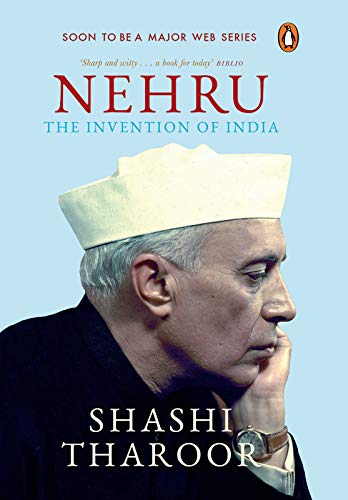
This is an excerpt from the book Nehru: The Invention of India by Shashi Tharoor.
Excerpts is a series where we post thoughtful passages from
different books which provide for a quick and easy reading.
Specialists from the National
Technical Research Organisation (NTRO) meanwhile on continuing basis were
obtaining latest satellite images of Balakot and its surroundings via ISRO
satellites to map the area precisely, breaking it down to the last detail about
the layout of the buildings in the campus, matching the inputs with information
from the ground obtained by the intelligence agencies to arrive at the
importance of each structure to narrow down the targets. The most important inputs
however came from two IB and R&AWs sources within the JeM who managed to
get inside the Balakot facility for three days between 19 and 22 February and send
information backed by pictures which clinched the decision to hit the camp. The
photos showed the training camp was alive and kicking and was in fact getting
ready to welcome 200 more trainees from 25 February.
The two
sources managed to document the entire facility visually and identify important
buildings and their occupants. Spread over few acres, the camp had 8 major
buildings and complexes devoted to various kinds of activities. Most important camp
was run by Masood Azhar’s brother-in-law Yusuf Azhar who resided in an
abandoned school complex on the campus.
Tragically, both the sources are
believed to have been killed in the IAF strike on 26 February. The invaluable
information and confirmation about the layout of the camp and movement of
important personnel in the compound helped India in precisely targeting specific
structures.
This is an excerpt from the book Securing India the Modi way: Balakot, A-Sat
missile test and more written by Nitin
A. Gokhale. Click here.
Excerpts is a series where we post thoughtful passages from
different books that provide for a quick and easy reading.
23 March, 1931, Began like any other day in
Lahore Central Jail.
The three young revolutionaries were moved out
of their cells to prepare them for the hanging. BHAGAT SINGH, SUKHDEV THAPAR
and SHIVARAM RAJGURU locked arms and strode behind the sentries and broke into
their favourite freedom song:
Kabhi woh din bhi ayega
Ke jab azad hum honge
Yeh apni hi zamin hogi
Yeh apna aasman hoga
Shahidon ki chitaon par
Lagenge har baar mele
Watan par marne walon ka
Yahi nam-o-nishan hoga.
(Someday that day will come when we are free/
This will be our land and our sky/
People will gather in the grounds where once/
Martyr’s pyres were lit/
A tribute to all those who/
Gave their lives for their land.)
The three men were weighed - they all had
gained weight -and asked to take their last bath. They were then dressed in
black robes. Their faces were left uncovered. Jail warden Charat Singh
whispered into Bhagat Singh’s ears to pray to Wahe Guru. Bhagat replied, ‘All
my life I have never prayed. As a matter of fact, I have many a times abused
God for the miseries of the poor. If I were to ask now for His forgiveness, He
will say, “Here is a coward who seeks forgiveness because his end has come”,
declining with a smile.
Dusk fell as the prisoners waited to hear the
sound of footsteps in the passage outside their cells. When the jail gong
struck six they heard muffled voices in the distance accompanied by the thud of
heavy boots and faint snatches of a familiar song, ‘Sarfaroshi ki tamanna ab hamare dil me hein…’ And then the sound ‘Inquilab Zindabad!’ and ‘Hindustan Azad Ho!’ rent the air. The
prisoners began to sing ‘mai rang de mera
basanti chola..’ (Mother prepare my clothes for martyrdom) and fervently
shouted ‘LONG LIVE REVOLUTION’ and ‘DOWN WITH IMPERIALISM!’ their urgent
voices resounding through the corridors of Lahore Central Jail.
The three men to be sentenced to death stood
on separate wooden planks, with a deep ditch running below them. Bhagat Singh
stood in the centre. He wanted to fulfil his mother's last wish and shout ‘LONG
LIVE REVOLUTION’ from the scaffold.
The noose was tightened around the necks of
the three young revolutionaries. Their hands and feet were tied. They kissed
the rope that looped their necks. Then the hangman asked who would go first.
Sukhdev said that he would. The hangman pulled the ropes one by one and kicked
the rafters from under their feet.
The bodies remained hanging from the scaffold
for a long time. Finally they were brought down and examined by a doctor.
Bhagat Singh, Sukhdev and Rajguru were pronounced dead. One jail officer was so
moved by the courage of the young revolutionaries that he refused the order to
identify the dead. He was suspended on the spot. A junior officer did the job
instead. Two British officers, one of them the superintendent of the jail,
certified the deaths.
This is
an excerpt from the book “WITHOUT FEAR,THE LIFE AND TRIAL OF BHAGAT SINGH” written by renowned journalist and
author - KULDIP NAYAR.
These three great martyrs of our land started
their journey (Rajguru joined the duo in Hindustan Republican Association)
together, fought together, faced conviction together and were hanged together.
Camaraderie has a whole new meaning for these immortal souls.
Excerpts is a series
where we post thoughtful passages from different books that provide for a quick
and easy reading.
Free
scholar Lawrence Liang has interestingly pointed out the contrast between the
First Amendment to the US Constitution
and the First Amendment to the Indian one. While the former created and
recognized the right to free speech in the US, the latter restricted the right
to free speech in India. This contrast, however, becomes less stark when one
realizes that the First Amendment to the US Constitution was actually the Third
Amendment-the states of that country did not ratify the first two amendments. Thus,
it is not really possible to argue that the framers of the US Constitution
believed the right to free speech to be a preferred right. The free speech
amendment was actually third on the founding father’s list.
.
.
.
During
the debate on the motion to refer the First Amendment Bill (Indian) to the
Select Committee, Pandit Thakur Das Bhargava, champion of reasonableness in the
Constituent Assembly, stood up once again to advocate the inclusion of the word
‘reasonable’ in Article 19(2).
‘I want
that the liberties of the citizen of this country should be protected’, he said, ‘and unless and until the word “reasonable”
is placed before the word “restrictions” [the Constitution] would not ensure
that liberty”.
Interestingly,
when Ambedkar stood up to support the Bill, Syama Prasad Mookerjee interrupted
him and asked, ‘Why have you omitted the word “reasonable” from the existing clause?’ This was an irony because
Ambedkar and his ministry had privately advocated the inclusion of the word ‘reasonable’ in the proposal amendment to
Article 19(2) even prior to its introduction in the House. Ambedkar responded
by virtually acknowledging that this was an unjustified omission: ‘That is a matter which may be discussed’,
he said.
When
the Bill was referred to the Select Committee, the only substantial change
which the Select Committee made was that the word ‘reasonable’ was now included in the proposed amendment to Article
19(2). One member of the Parliament later said that it was a ‘common belief’
that the home minister at the time, C.Rajagopalachari, was persuaded to include
the word ‘reasonable’ in the First
Amendment, ‘after a great deal of argument’. Virtually all the dissenting
members of the Select Committee acknowledged that this was a very substantial
change. When Nehru moved the Bill again in Parliament, he said that the word ‘reasonable’ had now been included in the
amendment, even though according to him its presence was always implied in Article 19(2). In fact, Nehru
privately thought that the insertion of the ‘reasonable’ would be an invitation for all free speech cases ‘to go
to the courts with ensuring uncertainty’.
The
inclusion word ‘reasonable’ in
Article 19(2) was an important compromise.
The First Amendment added three restrictions to the right of free speech: public order, friendly relations with
foreign States, and incitement to an offence. However, the word ‘reasonable’ in Article 19(2) now meant
that a court could determine whether a restriction imposed on any of the
enumerated grounds was reasonable or not.
Earlier,
Syama Prasad Mookerjee had pointed out the irony that while the First Amendment
to the US Constitution created the right to free speech, the First Amendment to
the Indian Constitution was seeking to restrict it. However, after seeing the
change made to the Bill by the Select Committee, Pandit Thakur Das Bhargava
said that the First Amendment Bill in India now also enlarged freedoms like the First Amendment in the US.
This is an excerpt from the book Republic of Rhetoric: Free Speech and the Constitution of India by Abhinav Chandrachud. click here
Excerpts is a
series where we post thoughtful passages from different books that provide for
a quick and easy reading.